
AI Agents for RevOps Teams: Fix Handoffs Before Revenue Slips

RevOps teams do not usually fail because they lack dashboards.
They fail because pipeline context decays between lead routing, meetings, CRM updates, and reporting. Source data arrives unevenly, stage changes lag behind reality, and weekly reviews turn into cleanup sessions instead of decision sessions.
That is where AI agents become useful.
Where RevOps teams lose control
Most RevOps issues show up in a few repeatable places:
- lead and account data arrive with inconsistent detail,
- meeting notes stay inside call tools instead of the CRM,
- lifecycle stages remain open after the real status changed,
- ownership exceptions pile up across SDR, AE, and post-sale teams,
- reporting gets corrected after the fact instead of guiding the week in real time.
When those gaps stack up, leadership stops trusting the numbers and the ops team becomes a repair function.
What to automate first
The first win is not "AI forecasting."
The first win is removing the coordination drag that keeps degrading the system of record.
A useful RevOps layer should be able to:
- normalize lead and pipeline data,
- convert call activity into CRM-ready summaries,
- flag missing fields and stale stages,
- surface handoff gaps between marketing, sales, and customer teams,
- generate weekly summaries before pipeline review starts.
That gives the human team more time for governance, prioritization, and forecast judgment instead of manual cleanup.
A practical EasyClawMart stack for RevOps
A clean starting stack inside EasyClawMart is:
- AI Lead Tracker for funnel-state visibility and cleaner lead movement tracking.
- Meeting Intelligence System for turning conversations into structured summaries and usable operating context.
- SaaS Metrics Dashboard for turning cleaner execution data into a reporting rhythm the team can trust.
That creates a simple operating path:
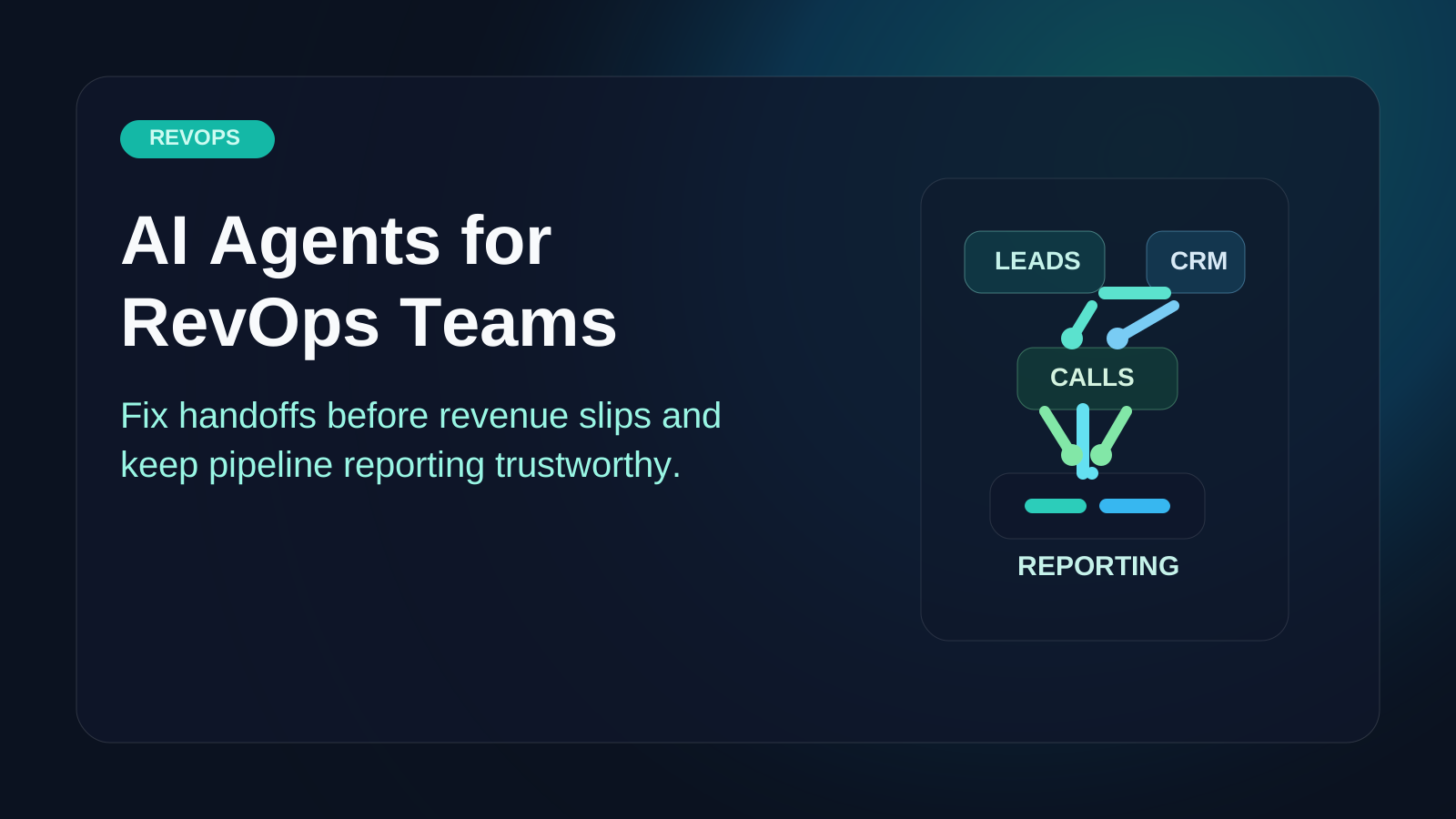
inbound + meeting activity -> structured CRM updates -> cleaner funnel state -> better weekly reporting
The agent layer should own continuity. The human team should own definitions, exceptions, and decision-making.
What should stay human
Keep these decisions with people:
- lifecycle definitions and governance,
- forecast interpretation,
- territory and compensation logic,
- high-impact attribution disputes.
If the team automates those too early, it usually ends up scaling bad rules faster.
What rollout should look like
A healthy rollout has four stages:
Week 1: meeting summaries and CRM-ready follow-up notes.
Week 2: stale-stage and missing-field alerts.
Week 3: weekly summaries for funnel health, response lag, and reporting quality.
Week 4: recurring handoff audits across marketing, SDR, AE, and post-sale workflows.
That order matters because trust grows when the team sees cleaner records before it is asked to trust deeper automation.
Why leaders should care
Leaders usually notice three wins first:
- CRM hygiene improves,
- handoffs get faster,
- pipeline reviews involve less arguing about what happened.
The most important win is the last one. AI is most useful when it helps revenue teams spend less time fixing records and more time deciding what to do next.
Where to start
If your RevOps team is stretched thin, start with meeting summaries and stage hygiene.
Once those are stable, add weekly reporting support and cross-team handoff checks. That sequence makes the system stronger without forcing the team to trust automation all at once.
RevOps improves when the operating layer stops leaking context between functions.
Start with these listings
Recommended EasyClaw picks for this workflow
Each article maps to real listings you can browse, buy, and adapt inside EasyClawMart.
© 2026 easyclaw. All rights reserved.
Read more articles